EN
EN

Net Zero Roadmap in Detail


The effects of the climate crisis are being felt faster and are more serious than anticipated. Temperatures have reached record levels in recent years, while environmental pollution and biodiversity loss are on the verge of becoming irreversible. Every year, natural disasters are becoming more frequent and destructive.
Our Science Based Target
Our 1.5°C aligned near-term and net-zero targets are officially validated by Science Based Targets initiative (SBTi).
With its approved science-based targets, the Company commits to reach net-zero greenhouse gas emissions across the value chain by 2050. As near-term goals, the Company aims to reduce its absolute Scope 1 and 2 emissions by 42% in 2030 compared to a 2022 base year, and Scope 3 emissions from use of sold products by 42% for the same time frame. As the long-term targets, the Company commits to reduce its absolute Scope 1,2 and absolute Scope 3 GHG emissions by 90% by 2050 from a 2022 base year. For its 10% residual emissions, the Company commits to investing in qualified nature and/or technology-based carbon removal projects in line with the SBTi Corporate Net Zero Standard.
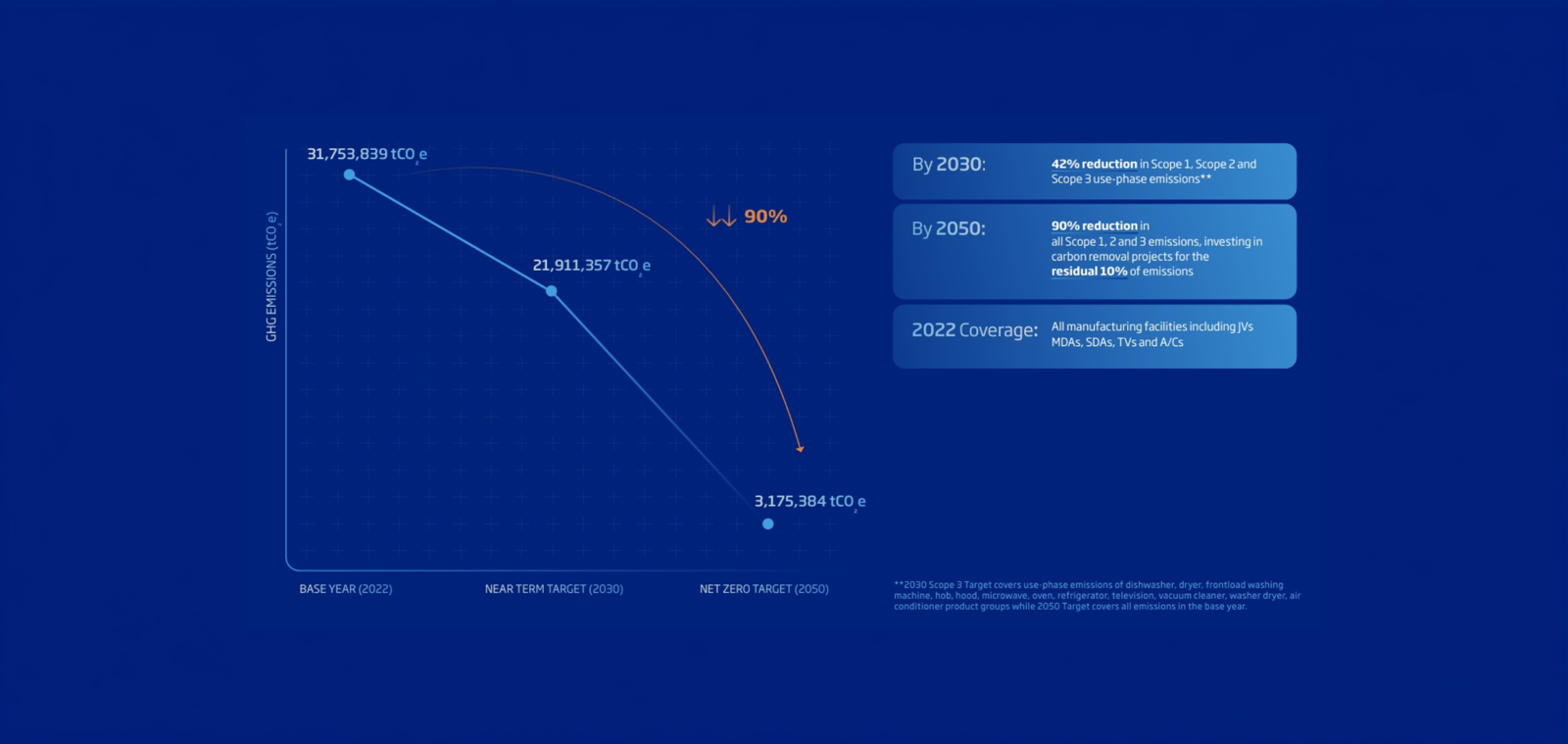
Net Zero Roadmap in Detail
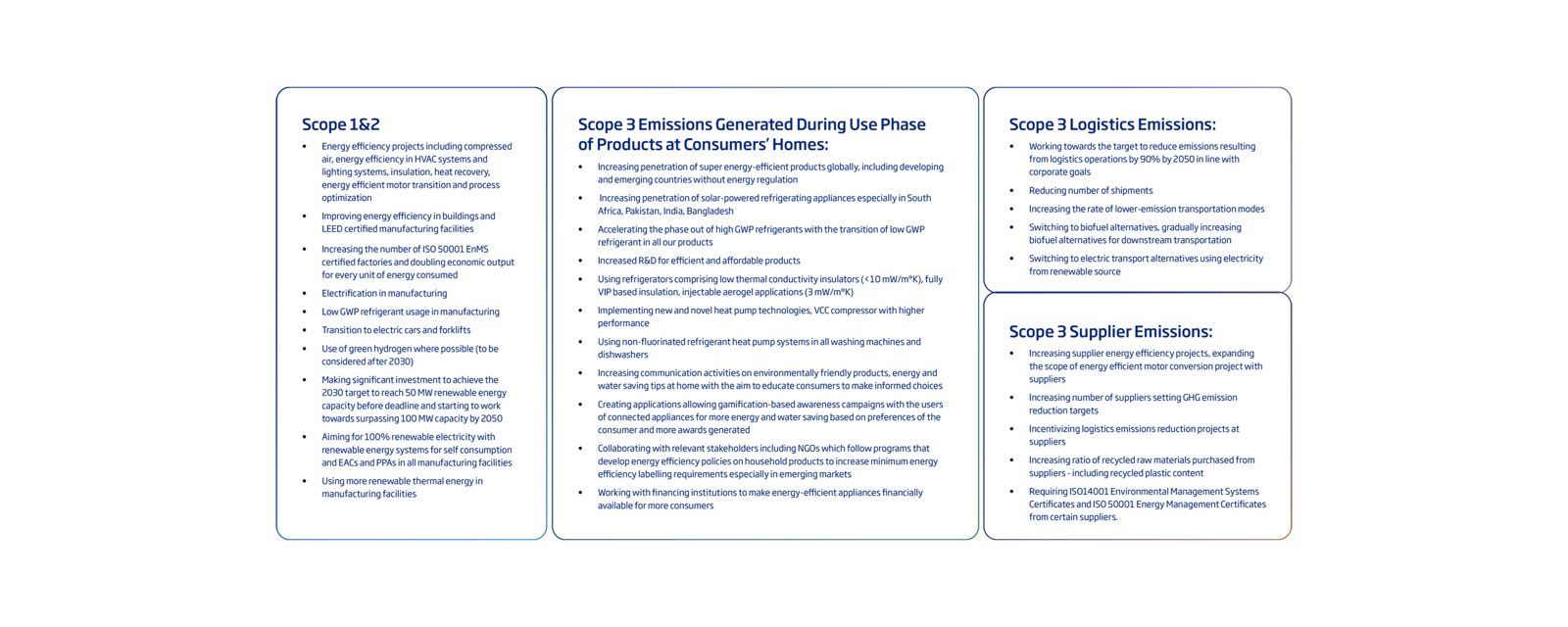
Energy Efficiency and Renewable Energy
We aim to establish renewable energy systems with a capacity of 100 MWp by 2030 in all our manufacturing facilities compared to a 2024 baseline.
To achieve our energy and climate goals, we continuously invest in energy efficiency solutions across our operations. These efforts focus on enhancing performance in key areas such as insulation, waste heat recovery, transition to energy-efficient motors, and the optimization of systems including compressed air, heating, ventilation, air conditioning, and lighting. These projects result in operational efficiencies that contribute to reductions in energy use and the associated GHG emissions, lower energy intensity while also generating financial savings.
Our target is to increase the ratio to 100% in all countries where we have manufacturing facilities by 2030 compared to a 2024 baseline.
We use an internal carbon pricing mechanism in order to identify investment costs more accurately by taking into account a possible climate transition scenario where Emissions Trading Systems (ETS) or a potential additional cost mechanism for some raw materials may come into force within the framework of the EU Green Deal. Considering these scenarios and implementing an internal carbon pricing mechanism as a strategic decision-making component related to capital investments paves the way for reducing financial risks that may arise in the short and medium term.
For further information regarding the targets and the actions already implemented towards Arçelik’s Net Zero target, and solar business, please refer to our Sustainability Reports.
For detailed information, please see the Company's Climate Change Strategy.
Risk Management
In order to ensure the top-level oversight of climate-related risks, the Board Member who is also Koç Holding Consumer Durables’ President has been tasked with reporting the ESG-related issues to the BoD and overseeing the climate-related risks. The Board Level Early Detection of Risk Committee has also been appointed as the highest-level committee responsible for the oversight of ESG risks and opportunities.
Being an adopter of IFRS ISSB standards, it is essential for the Company to integrate the risks arising from the climate crisis into the Enterprise Risk Management System to execute the relevant action plans in line with the Company’s Net Zero 2050 strategy and corporate sustainability strategy. Thus, the Company's Enterprise Risk and Insurance Management Directorate and Sustainability Department work in close coordination to identify, evaluate, measure and prioritize ESG related risks and opportunities and integrate the material topics into the Company's risk matrix.
The Sustainability Department is responsible for qualitative-quantitative identification of climate-related and other ESG risks based on scenario analyses in terms of both physical and transition risks and reports such risks to the Enterprise Risk and Insurance Management Directorate. Enterprise Risk and Insurance Management Directorate includes these risks in its reports to the Board-level Early Detection of Risk Committee at least two times a year. By supporting the IFRS ISSB which encompasses TCFD, we aim to strengthen the link between climate change and the resulting financial impacts on our business. Sustainability risks, including climate-related physical and transition risks are considered in the evaluation criteria of business decisions.
The Sustainability Council (SC), chaired by the CFO is the highest management level committee responsible for assessing and managing climate -related risks and opportunities and gathers quarterly to shape the strategy going forward. The Chief Sustainability, Quality & Customer Care Officer serves as the highest-ranking individual with responsibility for assessing and managing climate-related issues and execution of the entire sustainability strategy at the management level in the Company.
For further information regarding sustainability related risks and opportunities with their detailed description and impact analyses, please refer to our Sustainability Reports.
You can also refer to the Company's Climate Change Strategy.